Abu Dhabi Chairman of the Board of Directors of the Environment Agency Decision No. 6 of 2025 regarding the Issuance of a Policy on the Conservation and Restoration of Biodiversity in the Emirate of Abu Dhabi
Status
Issuing Authority
Effective date
Chairman of the Board of Directors of the Environment Agency – Abu Dhabi
- Having regard to Abu Dhabi Law No. 1 of 1974 on the Reorganisation of the Government Apparatus in the Emirate of Abu Dhabi and its amendments;
- Abu Dhabi Law No. 16 of 2005 on the Reorganisation of the Environment Agency – Abu Dhabi and its amendments;
- and Federal Law No. 24 of 1999 on the Protection and Development of the Environment and its amendments.
has decided:
Article 1
The Policy on the Conservation and Restoration of Biodiversity in the Emirate of Abu Dhabi, attached to this Decision, is hereby issued.
Article 2
The Environment Agency – Abu Dhabi, in coordination with the relevant authorities, shall monitor and implement the measures set out in the policy in accordance with its timetable.
Article 3
This Decision shall be published in the Official Gazette and shall come into force on the date of its publication.
Hamdan bin Zayed Al Nahyan
Chairman of the Board of Directors
Issued in Abu Dhabi
on: 02/09/2025
Corresponding to: Rabiʻ I 10, 1447 AH
Policy on the Conservation and Restoration of Biodiversity in the Emirate of Abu Dhabi – July 2025
1. Introduction
The United Arab Emirates has placed great emphasis on the conservation of its ecosystems and native species as a key objective of its development policy, and has made intensive efforts to conserve and develop the environment in a desert climate. In this context, in 1999 the UAE ratified the United Nations Convention on Biological Diversity adopted in 1992.
The Convention stipulates that ‘biological diversity and the benefits it provides are essential to human well-being and the integrity of the planet.
Despite ongoing efforts, biodiversity is declining worldwide, and this decline is expected to continue or worsen under business-as-usual scenarios. The post-2020 global biodiversity framework also paves the way for an up-to-date action plan to build on previous efforts and bring about a transformation in society’s relationship with biodiversity to achieve the vision of living in harmony with nature by 2050. At the 15th Conference of the Parties to the Convention on Biological Diversity in December 2022, the Parties adopted the Kunming-Montreal Global Biodiversity Framework, and were called upon to update their strategies and policies and align them with the post-2020 Global Biodiversity Framework.
In line with the definitions of the United Nations Environment Programme and the United Nations Convention on Biological Diversity, biodiversity is defined as “the variability among living organisms from all sources, including terrestrial, marine and aquatic ecosystems and the ecological complexes of which they are part; this includes diversity within species, between species and of ecosystems”. Biodiversity is therefore the diversity of life on Earth, encompassing all living organisms, species and populations; the genetic variations among them; and the complex interrelationships of communities and ecosystems.
Inspired by the vision and philosophy of the founding leader of the United Arab Emirates, the late Sheikh Zayed bin Sultan Al Nahyan, the protection of biodiversity has been emphasised as a key priority for our beloved nation and the Government of the Emirate of Abu Dhabi, as evidenced by the objectives of the UAE’s General Environmental Policy (2021) and the UAE Green Agenda (2015–2030), the UAE Climate Neutrality Strategy (2050), the General Framework for the National Biodiversity Strategy (2031), the Abu Dhabi Environmental Centenary (2071) and the Abu Dhabi Climate Change Strategy (2023–2027), as well as other plans and strategies.
2. Current Status of Biodiversity in the Emirate of Abu Dhabi
Threats to biodiversity in the Emirate of Abu Dhabi have increased significantly in recent decades. Urban, agricultural and industrial expansion, along with infrastructure projects, have led to changes in land use and, consequently, habitat loss and fragmentation.
Furthermore, the rise in local livestock numbers has exacerbated overgrazing of native vegetation, whilst continued pressure and demand on fish stocks have led to the overexploitation of fisheries. Climate change in the region is characterised by an increase in the frequency of droughts, irregular rainfall patterns with decreasing rainfall amounts, and a general rise in temperatures (State of the Environment Report, 2017).
2.1 Terrestrial and marine ecosystems
Terrestrial and marine ecosystems with natural adaptive capacity are now under threat from climate change and mounting human pressures. Based on the latest local assessment conducted in accordance with the IUCN Red List criteria, of the 16 ecosystems assessed in the Emirate of Abu Dhabi, 12 (75%) were identified as being at varying levels of threat, including two (13) classified as Critically Endangered, five (31) as Endangered, and five others (31) vulnerable to extinction, whilst four (25%) ecosystems were identified as less threatened based on their capacity to withstand the risks associated with their current geographical distribution (as shown in Figure 1). There is currently no evidence of any ecosystem collapse in the Emirate.
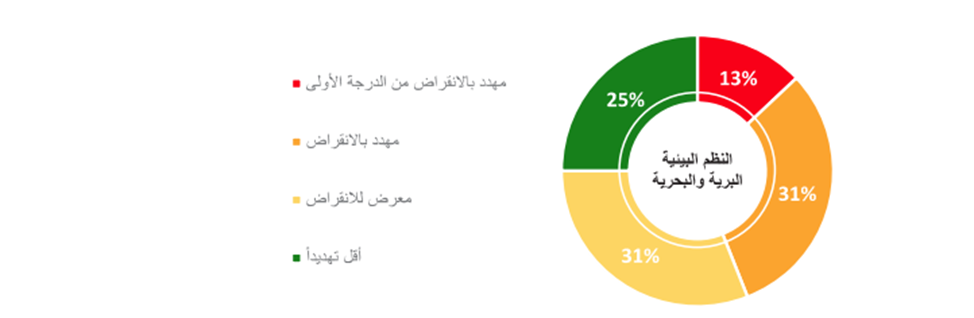
Figure 1: Percentage of the total number of terrestrial and marine ecosystems in the Emirate identified as threatened or vulnerable to extinction using the International Union for Conservation of Nature (IUCN) classification
2.2 The Red List of Wildlife Species
With regard to the Red List of wildlife species in the Emirate of Abu Dhabi, as shown in Figure 2, of the 244 species assessed in the Emirate, 74 fall into the three threat categories: Critically Endangered (10%), Endangered (11%) and Vulnerable (10%).
2.3 Factors affecting biodiversity
Native animal and plant species and natural habitats in the Emirate of Abu Dhabi are subject to numerous pressures resulting from rapid economic development, climate change, unsustainable resource use, and the presence of invasive and alien species.

Figure 2: Classification of species found in the Emirate according to the International Union for Conservation of Nature (IUCN)
Climate Change: The Abu Dhabi Climate Change Strategy (2023–2027) states that the Emirate’s climate is experiencing rising air and sea temperatures, as well as rising sea levels. The Emirate has also recorded changes in rainfall patterns and extreme weather events, such as an increase in the intensity of storms, droughts and floods. Consequently, terrestrial and marine ecosystems, which naturally possess the capacity to adapt, are now under threat from climate change and mounting human pressures.
Pollution: Pollution is one of the main environmental factors adversely affecting biodiversity, with various sources of pollution having a significant impact on ecosystems, plants and animals. Plastic waste has a significant impact on marine life, either through ingestion by marine organisms or entanglement in fishing nets, as well as through its breakdown in seawater to form toxic chemicals that have serious negative effects not only on living species but also on human health through the contamination of seafood.
Alien and invasive species: The introduction and spread of alien and invasive species disrupt local ecosystems and threaten the survival of native species through competition for resources and habitat destruction. The Ministry of Climate Change and Environment has identified 250 alien species and 24 invasive species in the State.
Social factors: Unsustainable consumption practices are considered among the main social factors affecting biodiversity in the Emirate, specifically overgrazing, which threatens natural habitats in the Emirate, particularly native plant species, which in turn play a vital role in providing shelter for animals and insects and reducing soil erosion. Overhunting on land and at sea also affects biodiversity in the Emirate.
Economic factors: Land-use changes and an increase in development projects have led to habitat fragmentation. Coastal development projects in the Emirate pose the greatest challenge, particularly given the presence of numerous heavy industries along the coast that use seawater for desalination or cooling, placing particular pressure on coastal environments. Furthermore, tourism activities and the increasing number of visitors and tourists to natural destinations will threaten species habitats and cause their numbers to decline if there are no management systems in place to operate these natural destinations, given that they are highly vulnerable areas.
Political factors: Inadequate enforcement of certain legislation related to environmental and habitat protection leads to the degradation of biodiversity. Furthermore, the lack of coordinated global cooperation on critical issues such as climate change, pollution and the conservation of natural resources hinders progress towards achieving biodiversity targets. Consequently, addressing biodiversity loss requires a comprehensive approach that takes into account the root causes of the problem, promotes policies that reconcile economic development with environmental conservation, and fosters social awareness and sustainable environmental management.
3. The potential impact of biodiversity loss
The degradation of biodiversity and natural habitats will have severe environmental consequences, the most significant of which is the disruption of essential ecosystem services such as air and water purification; organisms and habitats will become increasingly vulnerable to the effects of climate change due to their reduced ability to adapt.
The World Economic Forum’s Global Risks Report 2024 indicates that biodiversity loss constitutes a critical global risk, threatening health and economic stability, whilst undermining human well-being and society’s ability to adapt. Similarly, the assessment by the Intergovernmental Science-Policy Platform on Biodiversity and Ecosystem Services (IPBES) for 2019 indicates that the loss of coastal habitats and coral reefs reduces coastal protection, thereby increasing the risk of floods and cyclones, which threatens the lives and property of between 100 million and 300 million people living in coastal areas vulnerable to floods occurring once every 100 years economic terms, healthy ecosystems are vital for the long-term sustainability of economies and societies.
Identifying the full extent of the potential economic impact of biodiversity loss is a challenge, as calculations by the World Economic Forum indicate that $44 trillion of global economic output depends moderately or heavily on nature and its services, and this figure accounts for more than half of global GDP. The 2019 IPBES assessment indicates that land degradation has led to a decline in agricultural productivity across 23% of the world’s land area, and that an annual global crop yield worth between $235 billion and $577 billion is at risk due to the loss of pollinators.
Local communities in the Emirate of Abu Dhabi are closely linked, in terms of their heritage and culture, to their natural environment and rich biodiversity. Communities in coastal areas rely on marine biodiversity, making the sustainability of marine resources crucial to the preservation of maritime heritage. Emirati society and identity are also closely linked to the desert environment, which is the source of many traditional sports. Wildlife such as camels, falcons and ghaf trees are considered cultural and heritage symbols of the State; consequently, damage to biodiversity and natural habitats may affect the traditional customs and practices associated with these environments, and thus there may be a decline in future generations’ awareness of the link between heritage and the Emirate’s natural environment. Furthermore, the appeal of the Emirate’s natural destinations will be affected by the loss of biodiversity, which in turn will impact tourism revenues and reduce local economic benefits. This loss will affect the potential for ecotourism, requiring more costly efforts to restore the appeal of natural areas and promote ecotourism.
In line with national policies, and given the importance of biodiversity as the foundation of natural capital in the Emirate of Abu Dhabi, and in light of the risks of biodiversity loss in the Emirate and the need to enhance awareness and governance to protect the ecosystem and preserve the many essential services and functions that nature provides for human well-being, it is imperative to establish a clear policy on the conservation and restoration of biodiversity to define local priorities and principles for the protection of biodiversity and to implement a focused plan for the conservation of natural ecosystems in the Emirate, which is the responsibility of all partners in both the public and private sectors.
4. Policy Framework
4.1 Scope of Application
This policy applies to all areas of the Emirate of Abu Dhabi and covers all species of native flora and fauna currently recorded in the Emirate and those to be recorded in the future, as well as the associated marine, coastal and terrestrial ecosystems. This policy does not cover species known to be non-native, invasive or alien.
4.2 Policy Statement and Objectives
| Policy Statement: “To ensure the sustainability of biodiversity and the various services provided by ecosystems, to preserve the pivotal role of this diversity in economic development and societal well-being, and to set out future directions aimed at the protection of native species and natural habitats and the sustainable use of biodiversity resources.” |
The policy seeks to achieve the following objectives:
(1) To sustain local biodiversity and address the main threats to which it is exposed.
(2) Protecting the terrestrial and marine habitats necessary for the conservation of local flora and fauna.
(3) Raising awareness amongst all partners of the importance of local biodiversity and ecosystem services in the Emirate.
4.3 Legal Framework
This policy has been developed pursuant to Abu Dhabi Law No. 16 of 2005 on the reorganisation of the Environment Agency - Abu Dhabi, whereby the Law grants the Authority the power to protect the environment, wildlife and biodiversity in their natural habitats, to monitor them, to make proposals and recommendations, to develop balanced environmental policies, and to conduct the studies and research necessary for the conservation of the environment and the development of wildlife.
The policy is also drawn up in accordance with the requirements of federal and local laws and legislation relating to biodiversity, including:
- Federal Law No. 23 of 1999 on the exploitation, protection and development of living aquatic resources in the United Arab Emirates, its amendments and Executive Regulations.
- Federal Law No. 24 of 1999 on the protection and development of the environment, its amendments and Executive Regulations.
- Federal Law No. 11 of 2002 on the regulation and control of international trade in endangered animals and plants.
- Federal Law No. 9 of 2013 on Plant Genetic Resources for Food and Agriculture and its Executive Regulations.
- Federal Law No. 8 of 2021 on access to genetic resources and their derivatives and the fair and equitable sharing of benefits arising from their use.
- Abu Dhabi Emiri Decrees on the declaration of nature reserves in the Emirate of Abu Dhabi.
- Abu Dhabi Local Law No. 22 of 2005 on the regulation of hunting in the Emirate of Abu Dhabi.
- Abu Dhabi Local Law No. 11 of 2020 on the regulation of grazing in the Emirate of Abu Dhabi.
4.4 Method of Preparation
The Environment Agency – Abu Dhabi prepared this policy in consultation and cooperation with various relevant government entities in the Emirate through workshops, bilateral meetings and feedback sessions. Certain private sector institutions and segments of the local community were also involved. Table No. 1 below outlines the key roles and responsibilities of the government entities involved in the policy and the relevant sectors.
Table 1: Roles and responsibilities of the strategic sectors concerned with the policy
| Sector | Roles and responsibilities relating to the policy |
| Inter-sectoral |
Developing legislative frameworks related to the protection and conservation of biodiversity Carrying out monitoring, inspection and enforcement activities Carrying out inter-agency assessment and licensing activities Awareness-raising programmes on biodiversity and its conservation |
5.4 Standards and Guidelines
The policy is based on global standards that include the fundamental principles of sustainable use, conservation of biodiversity, transparent governance, and scientific research to inform decisions based on information and facts. The policy meets the following criteria:
- It has global reference standards and is consistent with international methodologies
- It is consistent with global commitments under the Convention on Biological Diversity and the post-2020 global framework for living in harmony with nature
- Supports the principles of environmental, economic and social development
- Adaptable to environmental changes and the impacts of climate change
- Ambitious and achievable
The policy is also based on the following guiding principles for the conservation and restoration of biodiversity in the Emirate:
- Sustainable use of biodiversity resources: Under the United Nations Convention on Biological Diversity, sustainable use is defined as the use of biodiversity and natural resources at a rate that ensures their natural regeneration, safeguards the needs of present and future generations, and maintains the health and vital functions of natural systems. Under this principle, the use of biodiversity and its resources is permitted, but such use must be regulated and authorised in accordance with the conditions of the area, species and purpose, with conditions specifying the quantities and materials permitted to determine their compatibility or incompatibility with uses at each site, with the aim of regulating the collection of species and limiting overgrazing or overfishing.
- Sustainable use of terrestrial and marine ecosystems: This principle sets out the requirements for comprehensive land-use planning and integrated management of coastal areas to halt the loss, degradation and fragmentation of habitats caused by changes in land use. Any strategic plans or projects and any proposed development or growth activities must progressively follow procedures to avoid, reduce and mitigate environmental impacts, and all permitted development activities must comply with the regulatory framework for inter-departmental licensing in the Emirate of Abu Dhabi, such that development and the use of resources are permitted in accordance with the federal and local laws applicable in the Emirate, with an emphasis on ensuring the rehabilitation of habitats that may be damaged as a result of these activities through innovative and sustainable measures that guarantee the preservation of ecological balance and biodiversity. Both permanent and temporary projects require an impact assessment through a Strategic Environmental Assessment (SEA), an Environmental Impact Assessment (EIA) or other environmental studies prior to the issuance of an environmental licence or the Authority’s approval, depending on the scale, type and location of the project. Construction and operational plans must be clearly defined, assessed and justified by proven economic, social or environmental benefits, whilst considering design and site alternatives to minimise the impact on...