Abu Dhabi Administrative Decision No. 365 of 2024 On the Guide to the Regulations Governing Soil Engineering Works in the Emirate of Abu Dhabi
Status
Issuing Authority
Introduction
Reflecting the vision of the wise government of Abu Dhabi and the directives of the senior management at the Department of Municipalities and Transport towards facilitating procedures and applying the highest standards of quality and accuracy in providing services to customers, and from the continuous pursuit to improve the work framework and raise the performance level in the concerned sectors in the municipalities of Abu Dhabi Emirate, thereby increasing customer satisfaction.
Considering the diversity of soil data and nature in different regions of the Emirate of Abu Dhabi, which requires specific testing and regulatory requirements suited to the type of data according to the type of required construction. Thus, improving the quality and accuracy of work for consultants and companies working in soil engineering and testing fields at the emirate level.
A guide has been prepared for the provisions regulating soil engineering works and published to be available to all customers, saving time and effort to know the requirements for obtaining soil engineering services of various types in an easy way that clarifies the submission requirements and organizes the work and its implementation on the sites without the need to visit the department, inquire, or search for other details to provide the service. The work has been carried out as follows.
Article 1 - Definitions and Terminologies
Licensing Authorities: The municipalities in the Emirate of Abu Dhabi, represented by the departments responsible for issuing building permits.
Concerned Municipality: The authority responsible for issuing the required permit according to the geographical scope of the Emirate of Abu Dhabi.
Electronic Portal: The unified electronic system for building permits, through which permit applications are received, distributed, and processed internally according to a set of specific work rules.
Engineering Company: The consulting office responsible for design, supervision and all other technical work related to the project.
Soil Investigation Laboratory: The company or institution concerned with performing geotechnical Soil Investigations, including field and laboratory tests according to approved standards and specifications by the accreditation authorities in the Emirate.
Geophysical Studies: It is the study of the underground conditions by implementing relevant engineering methods to measure utilize gravitational, electrical, and seismic characteristics of the underground and the subsurface ground. It is carried out by companies or institutions specialized in geophysical studies.
Urban Projects: All types of construction projects, including buildings and infrastructures.
Applicant: Any individual or entity with the authority to obtain the necessary building permit through the unified electronic system for building permits according to the rules.
Digital Data Model: A unified model used to fill in data and results extracted from specified testing and examination works for a project with the data being in a digital form automatically inserted into the electronic system.
Retaining Walls: A structure designed and built to withstand lateral soil and water pressure and prevent groundwater permeability according to the project requirements.
Boreholes: A small-diameter hole, usually vertical, drilled in the ground to a specified depth using special equipment to determine ground conditions and obtain soil, rock, and water samples for identification, study, and testing.
Building Stress: Stresses at the foundations of a building that is determined based on the structural design calculations.
Cavities: Open spaces or voids in the rock layers that vary in size and depth from one location to another depending on the geological structure of the area.
Building: The structures to be constructed on the plot through which the scope of soil investigation works is determined.
Light Industrial Buildings: Buildings in industrial areas of various regions with light loads (sheds, shops, warehouses, service rooms) with height not exceeding 10m.
Temporary Buildings: Buildings with light loads designed for short-term use at the project site.
Geological Hazards: A geological hazard is an adverse geologic condition capable of causing damage or loss of property or life. Common geological hazards in Abu Dhabi Emirate include and are not limited to (saline/salt layers, weak soils, solution cavities, clay layers, shells, and those associated with Al Aflaj).
Geologically Hazardous Areas: Areas susceptible to one or more of the geological hazards that may affect the safety of buildings or infrastructure in that area. Such hazards shall be considered during the design and the execution of works.
Piles: Vertical columns, relatively slender structural foundation members made of steel, concrete or composite, or sometimes timber, that are driven, drilled, or otherwise installed into the ground at different levels to transmit loads from superstructures to a deeper competent soil or rock layers.
Soil Bearing Capacity: Is the maximum pressure or load that the soil can support without undergoing excessive settlement, shear failure, or other forms of failure. It determines the ability of the soil to safely support the loads imposed by the structures.
Seismic Site Classification: It is a classification system that categorize sites based on their seismic response characteristics that is determined based on soil conditions and geological properties of the site, which influence the amplification of ground motion during earthquake. It helps in designing structures to withstand the expected acceleration levels during earthquakes.
Soil Improvement Contractor: The company or institution specialized in techniques and methods used to enhance the properties of soil for construction purposes using special equipment to meet specific requirements for building foundations, infrastructures, or other structures. They must have the necessary expertise and ability to understand geotechnical studies and specifications.
Trial Tests: The initial tests carried out on-site to determine the effectiveness of the selected soil improvement methods by examining and testing the targeted soil layers before and after the implementation of these methods.
Engineered Fill: It is fill materials, which are selected, placed and compacted to an appropriate specification such that it will exhibit the required engineering behavior. It is used to fill in a depression or hole in the ground, create mounds or otherwise artificially change the elevation of the ground.
ewatering Contractor: The company specialized in lowering the groundwater level or reducing water pressure in the soil at the project site using a variety of techniques and equipment to meet the project's technical specifications and requirements.
Fine Materials: The soil particles simply fine that are washed out from the soil mass during dewatering process which required to control the soil permeability and discharge rate.
Geophysical Study Companies: The companies specialized in using various geophysical methods to gather subsurface physical/geological information and underground layers of an area.
Service/Utility Buildings: Any building related to services such as (station, substation, transformer, Telecommunication Tower, cabinet, transportation facilities and service facilities, tanks, and similar types).
Caravans and Portable Containers: These types of caravans and containers that do not exceed 4m x 12m in dimensions and with ground floor only.
Article 2 - Administrative and Organizational Provisions for Soil Engineering Works
2.1 Conditions for Obtaining Soil Investigation Permit
2.1.1 TECHNICAL STANDARDS FOR SOIL INVESTIGATION WORKS
All soil investigation works, including sampling and preparation of geotechnical reports, must adhere to the requirements of the Abu Dhabi International Building Code (ADIBC for 2013), ASTM standards, British Standards (BS 5930- BS8004 - BS 1377), or any other equivalent codes or standards that are accepted by the technical authorities in the concerned municipality.
2.1.2 REQUIREMENTS TO OBTAIN SOIL INVESTIGATION PERMIT
It is not allowed for any laboratory, engineering company, or entity to perform soil investigation works within the Emirate without obtaining a permit for these works from the concerned municipality. This includes the following projects:
1. Building projects, residential villas, and buildings of various types
2. Infrastructure projects
3. Roads, bridges, culverts, tunnels, and railway projects
4. Any other projects or engineering studies that require soil investigation works
2.1.3 MECHANISM FOR APPLYING FOR SOIL INVESTIGATION PERMIT
1. The administrative and organizational requirements necessary to issue soil investigation permits for various types of infrastructure projects must be met. The scope of work and technical requirements must be reviewed by the relevant engineering section in the infrastructure sector of the concerned municipality, providing that prior approval on the locations of the boreholes is obtained from the Urban Planning Department for urban infrastructure projects.
2. The application for the soil investigation permit must be submitted to the relevant department in the concerned municipality, accompanied by the documents mentioned in the Abu Dhabi Building Permits Procedures Manual. The application must be submitted via the electronic system prepared according to the approved process.
3. All technical requirements and conditions related to soil investigation works, sampling, and report preparation are subject to modification to align with any future developments in the international standard specifications. These systems will govern all aspects related to soil investigation methods and preparation of geotechnical reports in case of any contradiction with any requirements that may be included in the project specifications or recommendations.
2.2 Review of Soil Investigation Report
2.2.1 REQUIREMENT FOR REVIEWING SOIL INVESTIGATION REPORT
It is not allowed for any engineering company or entity to apply for a building permit for any project without having approval from the concerned municipality on the soil investigation Report through the electronic system prepared according to the approved process.
2.2.2 REQUIREMENTS FOR REVIEWING SOIL INVESTIGATION REPORT
A request to review the soil investigation report is to be submitted to the concerned department in the relevant municipality accompanied by the documents mentioned in the approved building permit procedures services manual for the Emirate of Abu Dhabi.
2.3 Obtaining Soil Improvement Permit
2.3.1 REQUIREMENT FOR OBTAINING SOIL IMPROVEMENT PERMIT
Any engineering company or other entity is not allowed to carry out soil improvement works within the Emirate without obtaining a permit from the concerned municipality, provided that soil improvement works are necessary in accordance with the recommendations mentioned in the soil investigation Report and the consultant's estimates. This applies to all urban projects.
2.3.2 MECHANISM FOR APPLYING FOR A SOIL IMPROVEMENT PERMIT
1. The application for the soil improvement permit must be submitted to the relevant department in the concerned municipality, accompanied by the documents mentioned in the Abu Dhabi Building Permits Procedures Guide. The application must be submitted via the electronic system prepared according to the approved process.
2. All technical requirements and conditions related to soil improvement works are subject to modification to align with any future developments in the international standard specifications.
2.4 Obtaining Land Grading Permit
2.4.1 REQUIREMENTS FOR OBTAINING LAND GRADING PERMIT
Should the project area need levelling/grading by either raising or lowering to the required foundation level, the contractor or consultant must apply for a land grading permit according to the project's requirements within the plot limit. It is not allowed for any engineering company or other entity to perform land grading works within the limit of any plot in the Emirate without first obtaining a permit for these works from the concerned municipality. This includes all urban projects.
2.4.2 MECHANISM FOR APPLYING FOR A LAND GRADING PERMIT
1. The application for a land grading permit must be submitted to the relevant department in the concerned municipality accompanied by the documents mentioned in the Abu Dhabi Building Permits Procedures Manual. The application must be submitted via the electronic system prepared according to the approved process.
2. All technical requirements and conditions related to land levelling works are subject to modification to align with any future developments in the international standard specifications.
2.5 Obtaining Dewatering Permit
2.5.1 REQUIREMENT FOR OBTAINING A DEWATERING PERMIT
It is not allowed to perform any dewatering works required for excavation works in any of the various projects in the Emirate of Abu Dhabi (or for any other reason) without obtaining a permit for these works from the concerned municipality. This includes:
1. Residential buildings and villas.
2. Infrastructure works projects.
3. Road, bridge, tunnel, and culvert projects.
4. Site leveling works projects.
5. Any engineering projects involving excavation works that require groundwater dewatering during their execution.
2.5.2 MECHANISM FOR APPLYING FOR A DEWATERING PERMIT
1. The administrative and organizational requirements necessary to issue dewatering permits for various types of infrastructure projects must be met providing that the scope of works and technical requirements are approved from the relevant engineering section in the infrastructure sector of the concerned municipality. For urban infrastructure projects, it is required to obtain prior approval from the Urban Planning Department on the routes of the infrastructure projects. In addition, it is required to obtain prior approval from the relevant section in the concerned municipality on the design of the shoring system, should it be required for the project.
2. Consulting offices supervising the above-mentioned projects must apply for dewatering works permit through the electronic system prepared according to the approved process and must include all documents mentioned in the Abu Dhabi Building Permits Procedures Manual.
3. All technical requirements and conditions related to dewatering works are subject to modification to align with any future developments in the international standard specifications.
Article 3 - Technical Provisions for Soil Investigation Permits
3.1 Engineering Companies Working in Soil Investigation and Geophysical Studies
1. It is not allowed for any laboratory, engineering company, or any other entity to perform soil investigation or studies within the Emirate without obtaining a permit from the concerned municipality. They must hold accreditation and qualification certificates granted by the relevant authorities.
2. The application for the soil investigation permit must be submitted to the relevant department in the concerned municipality, accompanied by the documents mentioned in the Abu Dhabi Building Permits Procedures Manual. The application must be submitted via the electronic portal according to the procedures approved by the engineering department in the municipality.
3.2 Supervision of Soil Investigation Works
1. Soil investigation works must be conducted under continuous field and laboratory supervision by at least one qualified engineer from the Soil Investigation Laboratory, specializing in geological engineering or civil engineering. This engineer must be competent and fully knowledgeable in this field. The engineer's qualification must be included in the licensing application documents.
2. In addition, the consultant must officially appoint a competent and experienced engineer to attend and oversee all fieldworks for soil investigation. This engineer must endorse the testing program including tests type and number according to the retrieved soil/rock samples. The concerned authorities in the engineering department of the municipality must be informed at least two days before starting the soil investigation works at the site.
3. The consultant or laboratory engineer must evaluate the adequacy of the field and laboratory tests included in the issued soil investigation permit to meet the project's requirements and the need to conduct additional tests based on the initial test results. If more testing is necessary to gather enough data for a safe and cost-effective design, a new permit application must be applied for the additional tests and approved by the engineering department in the municipality.
3.3 Number of Boreholes and Minimum Depth
1. The locations of the boreholes must be selected to achieve a clear geological cross-section, allowing for the identification of changes in the thickness, depth, and properties of the soil layers. This selection must be made in an engineering manner suitable for the project, as illustrated in the following guidelines:
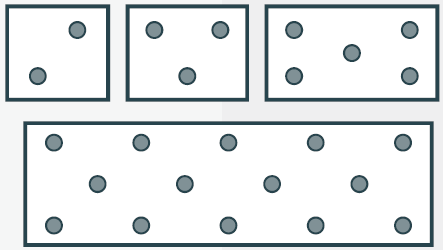
2. The minimum number of boreholes is determined according to the table below. Additional boreholes may be added according to the consultant's or municipal engineer's discretion to meet the project's requirements.
Table 1 - Minimum Number of Boreholes for Soil Investigation
| Remarks | Minimum Number of Boreholes | Ground Floor or Basement Area (m2)*** | No. |
|
Soil investigation is not required in any of the following cases: - If there is a previous soil investigation report for the same plot that meets the technical data requirements. -If there is an archive of construction drawings for the main building approved by the municipality. - Within the Al Dhafra Region, design can be based on a net soil pressure of 0.50 kg/cm² provided that the consultant undertakes full responsibility for this according to the approved model. - Within the Al Ain City Area, design can be based on a net soil pressure of 1.0 kg/cm² in general and 0.50 kg/cm² for areas with different natural characteristics, with strip foundations implemented, considering the estimates of the municipal engineer for each area. If the previous soil report or previous approved structural drawings shows the use of shallow foundations in geological hazards areas, a new soil investigation should be conducted and new foundation recommendations to be provided. | Drilling of one borehole | For Additions or extensions less than 100 square meters (ground floor only) | 1 |
* In some cases, the number of boreholes may be increased, or their distribution may be altered based on the geological characteristics of the site, the type of building to be constructed, or the nature of the loads affecting it. The consultant should determine this during the application for the required soil investigation permit.
** This requirement shall be based on the nature and characteristics of the soil in the area under consideration and on various geological hazards that have been identified from previous projects in the area (if any).
***If there are shared buildings in the same project, the total number of those buildings is to be considered. In case there are separate buildings with a spacing of more than 40 meters, the area of each building is to be considered separately and the areas specified in the table above must be used.
3. The boreholes' depth must be sufficient to determine the nature and type of all materials in the soil beneath the structure and the surrounding regions inside the plot's limits that might be affected by the loads from the structure, according to the following conditions:
- Except in the case where rock is encountered at shallow depths, soil investigation must continue to a depth where the increase in the vertical stress at that depth is less...